
Understanding nursing roles in BC
Nursing in British Columbia includes four distinct designations, each with its own education, scope of practice and role within the health system.
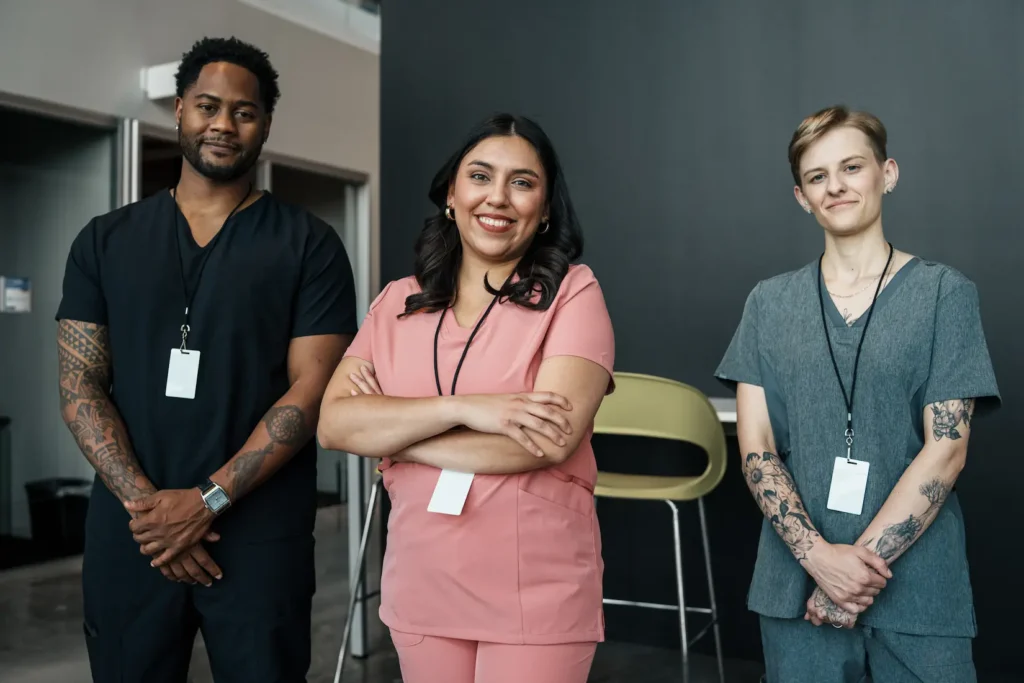
Nurses are part of nearly every area of British Columbia’s health system. They provide care across hospitals, primary and community care, long-term care, mental health and substance use services, public health settings in more, as well as serve as educators, researchers, administrators and policy makers.
Nursing in BC includes four distinct designations: Licensed Practical Nurses (LPNs), Registered Nurses (RNs), Registered Psychiatric Nurses (RPNs) and Nurse Practitioners (NPs). Each has its own education, scope of practice and areas of expertise, while working together as part of the broader nursing profession.
Explore the four nursing designations
Registered nurses (RNs) play a key role in the health care system and currently comprise the largest number of health care providers in BC and across Canada. Registered nurses are trusted health professionals who have successfully completed post-secondary nursing education and are able to provide safe, ethical and competent nursing services for the promotion and maintenance of health and the prevention of illness.
Some registered nurses also pursue additional education to obtain advanced nursing knowledge and clinical expertise. Registered Nurses who pursue this path also become known as a Clinical Nurse Specialist (CNS).
Some registered nurses may also complete additional education in the areas of reproductive health, remote nursing, and RN first call (for registered nurses who work in small and rural communities). Registered nurses who pursue these certifications become known as Certified Registered Nurses (RN-C).
Registered nurses complete accredited post-secondary nursing education and adhere to very high regulatory standards as part of their practice. All Registered Nurses in BC are registered health professionals with the provincial regulatory body.
What do registered nurses do?
Registered Nurses work in diverse roles and settings throughout the health care system including in all hospital departments and units, public health centres, long-term and assisted living facilities, residential care facilities, emergency relief programs, treatment centres, mental health centres, rural and remote nursing locations, private clinics and offices, in-home care, and anywhere else that health care is provided.
Registered nurses provide health care services to patients and clients of all ages and in all states of health including those who may be acutely or chronically ill, and in stable or unstable condition. Registered nurses may assess your health status, coordinate health services in other locations and with other health providers, plan out, evaluate and implement health strategies and treatments, and share information and resources to promote healthy lifestyle choices.
Registered nurses work in all departments and units in hospitals, clinics, and urgent care centres. In these settings, they may evaluate the health status and determine level of urgency for patients entering emergency departments (triage), make a nursing diagnosis based on signs and symptoms, provide care before, during, and after surgeries and procedures, administer oxygen, medications, or treatments, collect blood and tissue samples, perform assessments and record vital signs and care details, perform wound care, review tests and lab results, give client-specific orders for care, communicate with physicians and other members of the health team, and much more.
In public health and community care settings, registered nurses may work in long-term care or assisted living facilities, community health facilities, and public health centres to provide all manner of nursing services including conducting assessments and making a nursing diagnosis, coordinating care with other health care providers, creating a health care plan based on the patient or client’s specific needs, administering oxygen, medications or other treatments, performing wound care, collecting samples, recording vital signs and care details, administering vaccinations, and much more.
In rural and remote settings, registered nurses are often one of the only health care providers in the area. In these settings, Registered Nurses who have completed additional certification education may undertake additional care services.
In addition to these direct care roles, registered nurses also work as educators in post-secondary nursing institutions and continuing education programs; managers and supervisors who oversee other nurses and health care providers; researchers who lead and participate in science- and evidence-based research projects and development; advocates who work to advance the nursing profession through policy change; and government employees who work collaboratively in departments and units focused on nursing and health services, community projects, education and labour development, and more.
When would someone see a registered nurse?
British Columbians may see a registered nurse any time they visit a hospital or clinic to receive emergency or non-emergency care assessments and/or treatments; in their communities at private and walk-in clinics, community health centres, schools or other public institutions to receive nursing care, treatment, and counselling; in long-term, assisted living facilities and in-home to receive nursing assessment, care, and/or treatment; over the phone by calling 811 to receive non-emergency health advice and guidance; in mental health centres or community counselling centres to review medications and discuss mental, emotional and social health supports, and in virtually all other locations where health care is provided.
To speak with a registered nurse for non-emergency health advice, please visit HealthLink BC: Nursing Services or call 811.
To find community nursing services including that provided by a Registered Nurse, please visit the Province of BC Community Nursing webpage.
Nurse practitioners (NPs) are advanced practice nurses who have completed master’s level or higher education in nursing with integrated medical sciences. NPs provide holistic person-centred care, which means focusing equally on health and illness, disease prevention, wellness, and patient education.
NPs are regulated health professionals who adhere to strict practice and ethics standards, and work with their own license. NPs do not work under the license or direction of a physician or any other health professionals. NPs can diagnose and treat health issues, order and review lab/diagnostic tests, prescribe medications and treatments, fill out extended health forms, and initiate referrals for patients to see other health care specialists.
In BC, nurse practitioners may denote their stream of practice in their credentials, such as NP(F) or NP(Family), NP(A) or NP(Adult), or NP(P) or NP(Pediatric).
What do nurse practitioners do?
Nurse practitioners can autonomously diagnose and treat health issues, order and review lab/diagnostic tests, prescribe medications and treatments, fill out extended health forms, and initiate referrals for patients to see other health care specialists.
NPs work in many settings including in acute, urgent, community, residential, long-term, pediatric, and surgical settings. NPs also work as primary care providers for many British Columbians, thus working as part of collaborative teams in interdisciplinary clinics and health centres, urgent and primary care centres, hospitals, mental health centres, and private clinics.
In addition to providing excellent health care, NPs also work in a variety of other settings including management, education, research, and as members of government, policy, and advocacy teams. NPs also work as part of quality improvement initiatives, manage health facilities, and collaborate as part of interdisciplinary teams to promote and coordinate health and wellness services.
Why would someone see a nurse practitioner?
Nurse practitioners provide care to patients at all stages of life throughout their health care journey. British Columbians may see a nurse practitioner in a clinic as their primary care provider, in a hospital or Urgent and Primary Care Centre, or in residential care services.
In BC, not all residents have access to a primary health care provider. For those interested in locating a nurse practitioner currently accepting patients, please visit the Health Connect Registry.
Please note that NNPBC is a professional association representing nurses and nurse practitioners in the province of BC, and as such does not employ nurses or nurse practitioners for providing medical care. If you require urgent medical attention, please visit your local emergency department or call 911. If you are seeking medical advice from a licensed professional but do not require urgent medical attention, please call 811.
Is a nurse practitioner the same as a doctor?
Nurse practitioners and doctors are different health professionals, but both are equally important to our health care system. While nurse practitioners and doctors both work directly with patients to provide excellent primary and specialized care and may work together as part of the same health care team, their practice is independent from one another.
Licensed practical nurses (LPNs) play an integral role in BC’s health care system. As trusted health providers with comprehensive knowledge of clinical and nursing best practices, excellent relational skills and advanced critical thinking skills, LPNs commonly work directly with patients and clients in various roles across the health system. All LPNs in BC are registered health professionals with the provincial regulatory body who have completed post-secondary nursing education and adhere to very high regulatory standards as part of their practice.
What do licensed practical nurses do?
Licensed practical nurses provide health care services to patients and clients of all ages who may be acutely or chronically ill, typically with a focus on patients who are in a stable and/or predictable state of health. LPNs may assess your health status, work with you to plan out and implement various health care services and strategies, and share information with you to promote a healthy lifestyle.
Licensed practical nurses work in a variety of health care settings including in public and private clinics, long-term care and assisted-care facilities and residential care homes, public health centres, community and private in-home care, and in many hospital and urgent care departments including acute and emergency care departments, family medicine, pediatric, short admissions/treatment, and in surgical and post-operative departments.
In addition to care settings, many LPNs are educators who participate in research and instruction; managers, supervisors, and administrators who oversee other nurses and health care providers; business owners and operators for foot care and other specialized services; and government employees who work as part of departments and units focused on nursing and health services, community projects, and more.
In hospitals and clinics, LPNs work in many different departments and may work with patients before, during, and after surgeries and procedures, administering oxygen and/or medications, collecting blood and other types of samples, recording vital signs and care details, inserting and monitoring various care instruments, changing surgical dressings, and much more.
In public health and community care settings, LPNs work in health care centres, residential facilities and in-home providing different services such as administering vaccinations, changing wound dressings, providing foot care, evaluating health plans, coordinating care with other health professionals, and more.
When would someone see a licensed practical nurse?
Patients in British Columbia may see a licensed practical nurse any time they visit a hospital or clinic to receive emergency or non-emergency care treatments; in their community at walk-in clinics, community health clinics, schools and other public institutions to receive general health information, care advice or vaccinations; and in residential and long-term care facilities for various health services including assisted-living and palliative care.
Registered psychiatric nurses (RPNs) are important health care providers within BC’s health system. They are trusted health professionals educated in the same body of knowledge of registered nurses, with particular focus on promoting and providing mental and emotional health care.
Registered psychiatric nurses complete post-secondary nursing education and adhere to very high regulatory standards as part of their practice. All RPNs in BC are registered health professionals with the provincial regulatory body.
What do registered psychiatric nurses do?
Registered psychiatric nurses provide health care services to patients and clients of all ages many times with particular focus on mental health, emotional health, and/or psychosocial health. They may assess your health status, evaluate your physical, mental, emotional, spiritual, or developmental health needs, work with you to plan and implement health care treatments and plans, review medication history, and share information and resources to promote healthy lifestyle choices.
Registered psychiatric nurses work in many different settings throughout the health care system including in community and public care centres, mental health and counselling centres, private clinics, long-term care and residential facilities, corrections facilities, community projects, emergency reliefs programs, treatment programs, and in emergency, mental health, psychiatric, and intensive care units in hospitals and urgent care centres.
In addition to care services, many RPNs work in education, government, policy development, advocacy, management, research, non-profit/not-for-profit organizations, and in the private sector.
In all settings where they work, RPNs may assess patients to make a diagnosis, administer oxygen, nutrition, or medications, prescribe certain medications, collect blood or other types of tissue samples, perform wound care, monitor and record vital signs and other care details, assess mental health, discuss mental health and wellbeing treatments and services, and much more.
In community and public health settings, registered psychiatric nurses often provide patients and clients with mental and emotional health care and support, prescribe certain medications, refer patients to other health care and social service providers, offer substance use and harm reduction supports, and more.
When would someone see a registered psychiatric nurse?
RPNs provide care and support for patients’ physical health as well as their mental, emotional, and spiritual health. Patients may seek the support of an RPN while in consultation with other mental health care providers to discuss counselling services, medications and treatments, provide updates on mental health status, and more.
In hospital emergency departments, registered psychiatric nurses may be present to assess and provide next step options for patients with mental health or combination of physical and mental health care needs.
RPNs also promote and provide what is called “psychosocial” health care support. Psychosocial health relates to the combination of mental, emotional, social, and spiritual needs of a person and is a particularly important component of overall health and wellbeing when patients undergo life-sustaining treatments such as cancer treatments, dialysis, transfusions, and others.
To find mental health care providers including registered psychiatric nurses in BC, please check out these resources:
- BC Crisis Line: 1-800-784-2433
- BC Mental Health Support Line: 310-6789 (no area code)
- Canadian Mental Health Association, BC
- BC Child and Youth Mental Health
- Here to Help
- Wellness Together Canada
To find Indigenous mental, emotional, and spiritual care and supports, please check out these resources:
- BC Mental Health and Crisis Support Line for Indigenous Peoples across Canada: 1-855-242-3310
- Hope for Wellness
- Indian Residential School Survivors Society
- Indian Residential School Survivors Society 24/7 Crisis Line: 1-800-721-0066
- KUU-US Crisis Line Society
- KUU-US Adults/Elders Crisis Line: 250-723-4050
- KUU-US Children/Youth Crisis Line: 250-723-2040
- KUU-US Métis Line: 1-833-638-4722
- KUU-US Toll Free Line: 1-800-588-8717
To find substance use supports and information for people living with substance use, those with lived experience, and family and support networks, please check out these resources:
- BC 24/7 Addiction Medicine Clinician Support Line: 778-945-7619
- BC Centre on Substance Use: Drug Checking Project
- BC Mental Health and Substance Use Services
- BC Wellbeing: Drug Checking Services
- Canadian Mental Health Association, BC
- Here to Help
- Lifeguard Digital Health app
- Moms Stop the Harm
- National Harm Reduction Coalition
- National Overdose Response Service
- Toward the Heart: BCCDC Harm Reduction Services
- Vancouver Area Network of Drug Users
Please note that NNPBC is a professional association representing nurses and nurse practitioners in BC, and as such does not employ nurses or nurse practitioners for providing medical care. If you require urgent medical attention, please visit your local emergency department or call 911. If you are seeking medical advice from a licensed professional but do not require urgent medical attention, please call 811.
The five domains of nursing
Nursing takes many forms. While direct care is often the most visible part of the profession, nurses also teach, lead organizations and teams, build knowledge through research, and contribute to decisions that shape health care.
These different areas of work are often described through five domains of nursing:
Clinical practice
Providing nursing care directly to individuals and communities across a range of health care settings across the province.
Education
Preparing future nurses and nurse practitioners, supporting learning throughout a nurse’s career, and sharing nursing knowledge with patients, families, and communities.
Administration
Leading and managing people, programs and services, and helping create the conditions for nurses and nurse practitioners to provide effective care.
Research
Building and applying evidence to deepen nursing knowledge, improve practice and better understand the health needs of people and communities.
Policy
Bringing nursing knowledge and experience into the development of policies and decisions that affect health, health care and the nursing profession.
Nurses and nurse practitioners may work primarily within one domain or move between several over the course of their careers. Together, these domains reflect the breadth of nursing and the many ways nurses contribute to health and health care.
The professional association for nursing in BC
A professional association exists to advance a profession and support the people within it. As BC’s professional association for nurses and nurse practitioners, NNPBC brings the profession together around shared priorities, provides practice and professional supports, and advocates on issues that affect nursing and health care.
Our role is distinct from that of regulators, unions and employers, each of which has a different mandate within the nursing system.

NNPBC: Your professional nursing association
Nurses and Nurse Practitioners of BC brings together all four nursing designations, offering career and wellness resources, advancing professional growth, and advocating for nurses and nurse practitioners in health and social policy.
Membership is voluntary and helps strengthen the voice of nursing in places where decisions about your practice and the profession are made. NNPBC’s role is to be the home for nursing in BC, uniting the profession, promoting excellence, and ensuring that nurses’ knowledge and expertise help transform health care.
Unions
Strengthen the workforce by representing nurses as employees, negotiating fair wages and benefits and addressing workplace issues through advocacy and collective bargaining.
Regulator
BC College of Nurses and Midwives: Sets the standards of safe, ethical practice; assesses nursing and midwifery education programs; establishes requirements for registration with BCCNM; and addresses complaints about nurses and midwives.
Infographics
These are historical resources developed by NNPBC and are being shared for reference. Some information, terminology or descriptions of nursing practice may have changed since they were developed. For current information about nursing scopes of practice and professional standards in British Columbia, please refer to the BC College of Nurses and Midwives.